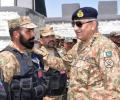
If Imran Khan delays his assent to General Bajwa's recommendations any further, it could imply he is taking stock of possible serious dissent within Pakistan's top army echelons, says Rana Banerji, who headed the Pakistan Desk at the Research and Analysis Wing, India's external intelligence agency.

The Pakistan government will not grant any further extension to Inter-Services Intelligence chief Lt Gen Ahmed Shuja Pasha, whose current term ends in March, and is considering the names of three generals to replace him, according to a media report on Thursday.
Pakistan will not take military action against the Haqqani network despite growing pressure from the United States, even as the country's top military commanders have agreed on the need to de-escalate the situation, according to media reports on Monday. These decisions were made at a special meeting of the Corps Commanders chaired by Pakistan Army chief General Ashfaq Parvez Kayani on Saturday. The commanders vowed to resist US demands for an offensive against the Haqqanis.
Prime Minister Yousuf Raza Gilani and Pakistan Army chief Gen Ashfaq Parvez Kayani will come face to face for the first time since they crossed swords over the memo issue, when a cabinet committee meets on Saturday to discuss crucial issues related to national security and relations with the US.
Insisting that the Pakistani Army is supportive of a dialogue with India, former Pakistan Foreign Minister Khurshid Mahmud Kasuri said Prime Minister Manmohan Singh should visit his country to kickstart the peace process.
Days after Pakistan Army chief General Ashfaq Parvez Kayani called for an end to drone attacks in his country, unmanned American spy planes today unleashed 10 missiles at a compound in the volatile North Waziristan, killing at least 25 people, including civilians.
The Pakistan Army chief will not like to place himself in a position where he has to overthrow the elected head of state and the supreme commander of the armed forces, says B Raman
Hours before Washington is set to release an assessment of war in Afghanistan, topmost United States military commander has expressed "impatience" with Islamabad over its failure to clear terrorists from havens on the border with Afghanistan.
General Bajwa remains in command as army chief and Prime Minister Imran Khan did not play any role in the reshuffle, says Rana Banerji, who headed the Pakistan Desk at the Research and Analysis Wing, India's external intelligence agency.
"It is interesting that the US claims to want a democratic Pakistan, but whenever there's a congressional delegation that goes to Pakistan, they don't meet their counterparts in the National Assembly. They all want to meet General Kayani and General Pasha, because they understand that's where the power lies," said Christina Fair of the Georgetown University.
Shuja Nawaz, arguably the most authoritative expert on the Pakistani military, assesses the US-Pakistan strategic dialogue.
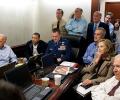
Barack Obama has said that he had ruled out involving Pakistan in the raid on Osama bin Laden's hideout because it was an "open secret" that certain elements inside Pakistan's military, and especially its intelligence services, maintained links to the Taliban and perhaps even al-Qaeda, sometimes using them as strategic assets against Afghanistan and India.
Pakistan President Asif Ali Zardari will commence a high-level visit to China from July 6 during which the two countries will firm up a deal for supply of two new nuclear reactors to Islamabad.
The ruling Pakistan People's Party feels that the disclosure of US diplomatic cables have been beneficial to return of popular rule in the country as it has forced the military to clarify its position regarding democracy, a party leader has said.
Renowned United States investigative journalist Seymour Hersh has clarified that his article in The New Yorker never claimed that there was any agreement between Pakistan and the US over nuclear weapons, adding that an 'informal understanding' existed between the Chairman of US Joint Chiefs of Staff Admiral Michael Mullen and Pakistan Army Chief General Ashfaq Parvez Kayani, over the safety of Pakistan's nuclear installations.Hersh's article created a huge furore in Pakistan
Pushed on the back foot by the powerful military's criticism of some of the provisions in the US economic aid bill, Prime Minister Yousuf Raza Gilani said on Tuesday that the clauses of the Kerry-Lugar legislation are not binding on Pakistan.
As Washington tries to find its way out of Afghanistan, Pakistan has emerged as the central player dictating the terms of this emerging endgame in South Asia, notes Harsh Pant.
Pakistani terrorist Omar Saeed Sheikh made the hoax calls to Pakistan President Asif Ali Zardari and Pakistan army chief General Ashfaq Pervez Kayani after last year's terror attacks on Mumbai, investigators have told Pakistan's Dawn newspaper.
A change in Pakistan, however, is inevitable in the weeks ahead. The big question will be whether such a change will make Pakistan a more stable country or push it further towards a failed state.
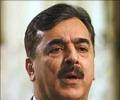
Pakistan Prime Minister Yousuf Raza Gilani and army chief General Ashfaq Parvez Kayani on Monday made an unannounced visit to the restive Swat valley where troops are engaged in flushing out Taliban militants.A top-level review of the security situation and the repatriation of the displaced people, uprooted by insurgency, was the highlight of the visit. The visit also assumes significance with reports of the army being on the verge of wrapping up the intensive operation.
Pakistan President Asif Ali Zardari is on shaky grounds, Prime Minister Yousuf Raza Gilani is pro-America and Army Chief General Ashfaq Pervez Kayani is doing well in taking military action against terrorists in his country, a top Republican Senator said on Monday.
The international community, including India, must offer the Pakistan government all the help and encouragement that it needs to fight and root out the menace of radical extremism, or else the terrorists will spread their tentacles far and wide -- including, eventually, into India.
In a bid to defuse tensions between India and Pakistan, United States on Monday rushed its top Army official to Islamabad, to hold discussions with the country's political leadership. US Joint Chiefs of Staff Admiral Mike Mullen arrived in Islamabad today on an unscheduled visit, second after the November 26 terror strikes in Mumbai that killed more than 180 people. Mullen met Pakistani national security advisor Mehmood Ali Durrani shortly after his arrival.
While officials of the two allies offered few details on Wednesday about what was decided or even discussed at the meeting -- including any new strategies, tactics, weapons or troop deployment -- the star-studded list of participants and an extreme secrecy surrounding the talks, New York Times said the talks underscored how gravely the two nations regarded the growing militant threat.
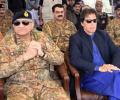
'The decision has been taken in view of the regional security environment.'

During a hearing on a suo motu case on the coronavirus crisis in Pakistan, a five-member bench of the apex court observed that PM Khan's Cabinet has become ineffective in the fight against the pandemic. The bench questioned the integrity of Dr Mirza in tackling the COVID-19 crisis and the transparency of his work done.
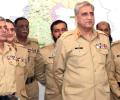
As many as 17 three star generals will retire before General Bajwa hangs his boots, says Rana Banerji, who headed the Pakistan desk at the Research and Analysis Wing, India's external intelligence agency.
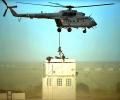
'While US officials understand and accept India's desire for retaliation, they still don't want to encourage steps that would likely lead to war.'
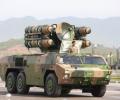
With its new army chief Gen Qamar Javed Bajwa set to take charge, Pakistan has asserted that focus will remain on country's eastern border with India, even as the US nudged Islamabad to keep the pledge of not allowing use of its soil for terror attacks against neighbours.

Pakistan's top military commanders have discussed the likely implications of the leaked report of the Abbottabad Commission which has made a series of stinging remarks against the country's powerful security establishment.

General Qamar Bajwa, his colleagues say, is a firm opponent of extremism and terrorism. He may prove even more forceful in the fight against terrorism than his predecessor, who is credited with launching Operation Zarb-i-Azb, which helped lower the frequency of terrorist attacks.
'It is not difficult for a Pakistan army chief assisted by the deep state to manipulate a situation.' 'Pulwama, Uri and Pathankot, all come to mind,' cautions Lieutenant General Syed Ata Hasnain (retd).
The verdict was announced after the government submitted a 'new summary' to extend the service of 59-year-old Gen Bajwa.
Reacting to the embarrassing development, Khan chaired an emergency Cabinet meeting and took back the notification to extend services of General Bajwa.

"We want good ties with all neighbours including India and Afghanistan," he told the Senators.
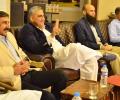
'Over the last year, Bajwa has created the environment to support bold moves on India. The ball is in India's court,' a senior Pakistan military officer tells Ajai Shukla.
India must watch for signs after Peshawar that Pakistan is waking up to the dangers of Islamism, muses Ajai Shukla

In his latest book 'Playing to the Edge', Michael Hayden, the former CIA director said that Pasha had conceded that some of the powerful spy agency's retired members were engaged in training those involved in the heinous crime but refused to take action.
Investigative journalist Seymour Hersh claims that ISI got hold of bin Laden in 2006 after paying bribes to some of the tribal leaders
Pakistan's Supreme Court on formally charged Defence Secretary Lt Gen (retired) Asif Yasin Malik for contempt of court after he failed to deliver on an undertaking for holding local body polls in cantonments across the country.
